Showing posts with label Alabonia geoffrella. Show all posts

Friday, June 02, 2017

Scatological shenanigans...

It's hard to believe it is almost a month now since my last update. As somebody once said though "Time flies, it's up to you to be the navigator". I prefer this Woody Alan quote myself: "Time is Nature's way of keeping everything from happening at once". Enough time wasting anyway, on with the motley! 

"Thou art not a man, thou’rt but a jester!
On with the motley, and the paint, and the powder!
The people pay thee, and want their laugh, you know!"


Well I am not sure I can provide laughs, but this moth might at least make you smile?


I know there are people who will already know the name of this particular moth; but for those who don't, if you had to name it, what would you choose? Well, if you said The testicle, you would be right. Oh! No, sorry, I ballsed-up...if you said The Spectacle, you would be right! Probably one 'toilet humour' joke, is one too many, so let us dump the jokes and move along. 

By the way though: did you know the great composer Mozart was fond of toilet humour? Yes, it's true. Example: when Margaret Thatcher was apprised of Mozart's 'scatology' during a visit to the theatre to see Peter Shaffer's play Amadeus, director Peter Hall relates:

She was not pleased. In her best headmistress style, she gave me a severe wigging for putting on a play that depicted Mozart as a scatological imp with a love of four-letter words.
 It was inconceivable, she said, that a man who wrote such exquisite and elegant music could be so foul-mouthed. I said that Mozart's letters proved he was just that: he had an extraordinarily infantile sense of humour ... "I don't think you heard what I said", replied the Prime Minister. "He couldn't have been like that".
 I offered (and sent) a copy of Mozart's letters to Number Ten the next day; I was even thanked by the appropriate Private Secretary. But it was useless: the Prime Minister said I was wrong, so wrong I was!


Copyright free photo (not my image)
T'other day, I came across an owl pellet. An owl eats  small rodents, birds, and bugs as a part of its nightly diet, its stomach cannot digest the fur, bones, teeth, feathers, and insect shells from that food. These “extra” parts are formed into a tight pellet inside the owl and are then  later regurgitated. 


I think from using this guide above, I am happy that the pellet came from a little owl and I have seen them at the location. These pellets are always fun to dissect and examine to see just what the owl has been feeding on, and so I did...


It looks as though click beetles are a favourite! Four almost complete beetle were inside the pellet. You have to wonder what nutritional value they offer, being so small and so intact looking when they exit the owl? Don't you? Well I do!

More pellet contents

Could this be the remains of a shieldbug?


I'm not sure; could just be the rear end of a ground beetle, as they seem to be another favourite dish for this little owl. What about this next one though, any ideas?


This year seems to be proving a good one for the little 24-spot ladybirds. These are vegetarian ladybirds and are covered with a layer of fine hairs (who amongst us isn't?) and they measure around 4mm. Their colouring is described as russet...
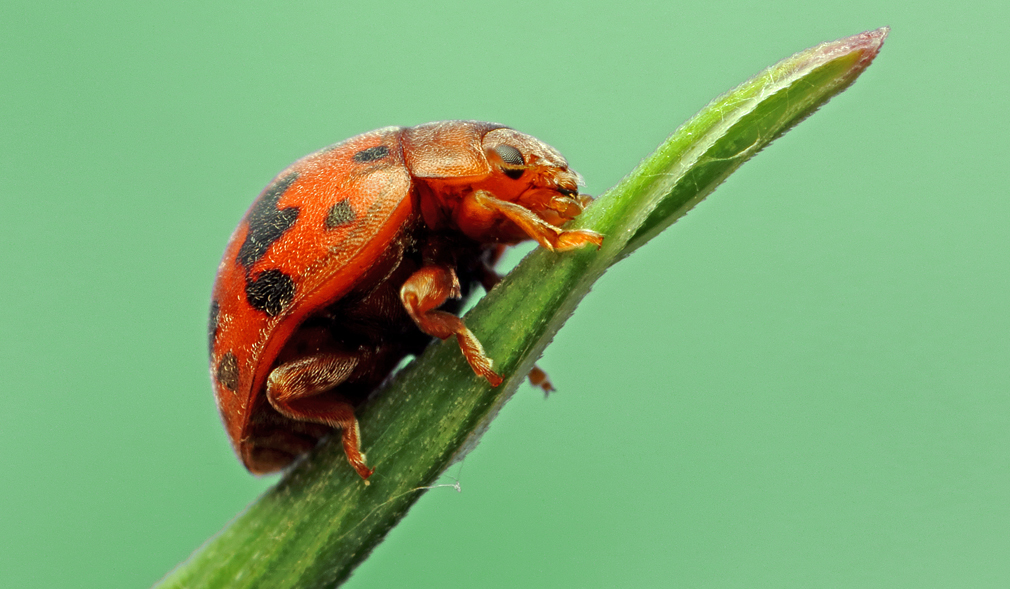


24-spot Ladybird (Subcoccinella 24-punctata)


24-spot Ladybird larva
The larvae are quite spectacular, and not at all like the adult beetle. I used flash on these photos but it was giving me some trouble on that day and sometimes was not firing at all. Here's one when it failed to fire: I actually quite liked the effect and so kept the shot to share...


While...(I was going to write 'whilst' then, but according to the Cambridge Dictionary 'While is much more common than whilst, and whilst sounds more formal', so I didn't) anyhow, while I was out photographing the ladybird and larva, I came across something I rarely see; mostly I suspect because of its size at just 2.5 - 4.5mm. This is a Delphacid bug and looks like this...


I wouldn't like to speculate about species, as there are so many similar ones.


This update does seem to be featuring mostly tiny creatures, but I can assure you that it isn't planned...JJ planning??? This one turned up in my moth trap recently (along with a number of moths that may have to wait for another update. It measures just 3mm and as far as I can tell, seems to be a species of powder post beetle. They are wood boring beetles and get their name from the fact that the larvae feed on wood and can, in time, reduce it to powder.

This beautiful beetle was also in the same moth trap; in fact I had 3 that night...

May-bug or Cockchafer (Melolontha melolontha)


I continue to rescue wildlife from the bird bath in the garden. Mostly insects and often bees...


I haven't a scooby-doo about the identity of this one, but what a beauty. Those eyes are amazing. I only wish I did know, but my skills at identifying bees rival my prowess at sport! A couple more finds then and I think that will probably suffice for this update...


A Brown Lacewing - Wesmaelius subnebulosus (Neuroptera

Leptopterna dolabrata nymph

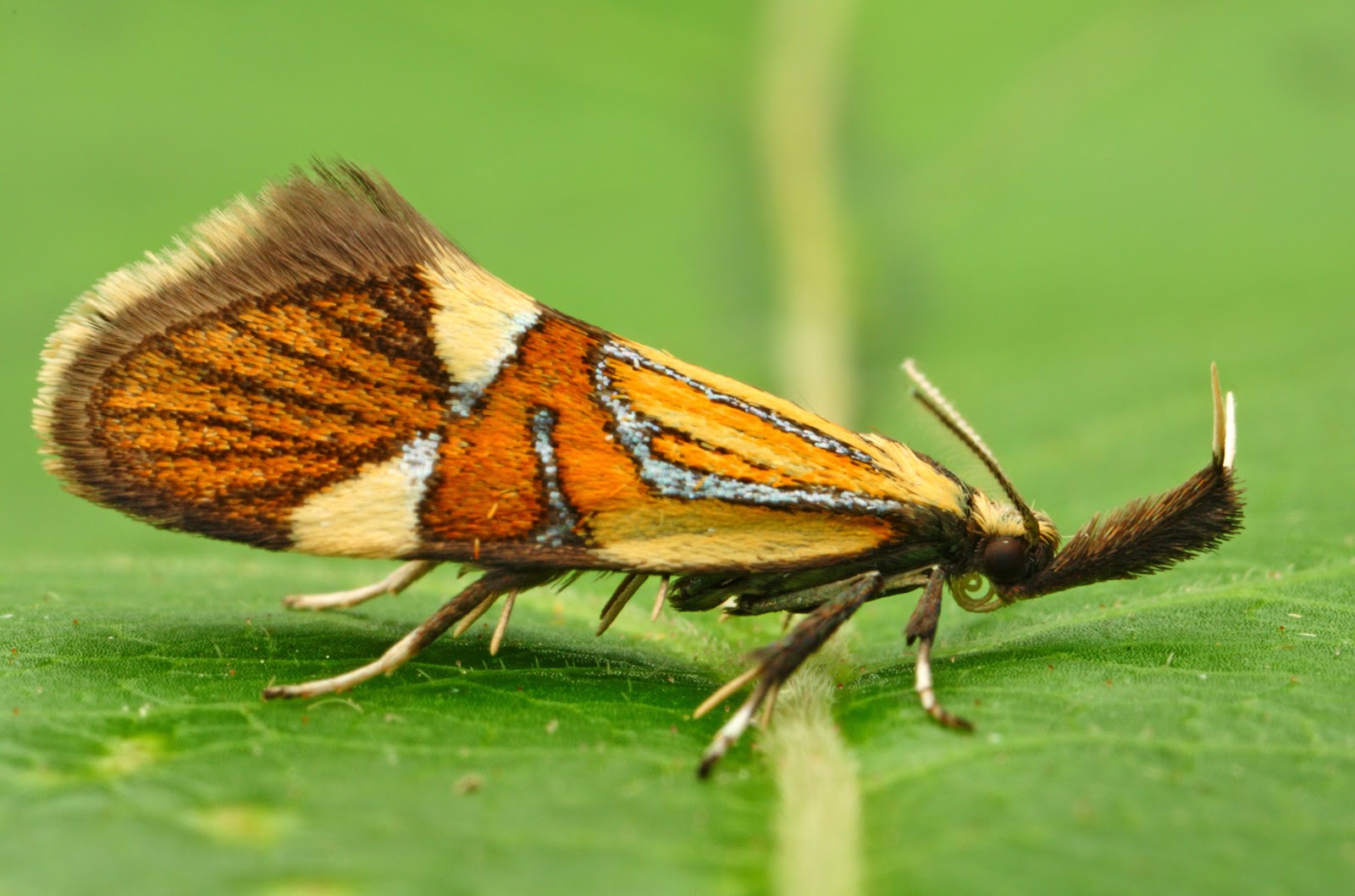
Alabonia geoffrella (Common Tubic moth) 


Friday, June 12, 2015

Tiny bugs and noisy starlings...

I want to begin this update with an example of just why macro-photography holds such a fascination for me. I have dabbled in other types of photography at times, but it's macro that holds my interest over and above all else. These first two photographs seem to illustrate the point nicely...


I was looking for sawfly larvae when I found this tiny fly the other day. There's nothing outstanding or particularly interesting in either the fly, or the photo and I almost overlooked it completely. But, I guess because it appeared to be fairly docile and sedentary in the late evening cooler temperatures, I thought to myself, why not try and get a closer picture? I'm so glad I did...


Just look at the detail a photo at x5 magnification reveals! The entire head seems to given over to those huge eyes. You have to wonder just where the brain is and how small it must be? It's this kind of revelation that still grips me and excites me. You never know what each photography session is going to reveal and even then, I sometimes get home and view the pictures on my PC and notice something I didn't even see at the time by viewing the camera's LCD screen.


I did eventually find some of the sawfly larvae that I had been originally looking for that day...


And then the next day I spotted this female sawfly egg-laying (apologies for the lack of sharpness in this photo, I am not very good with the little point and shoot camera) and as I didn't want to disturb her, I made a mental note to return and see if I could find any eggs.


A Birch Sawfly?

EDIT: Update on this from Flickr contact Steviethewaspwhisperer who says: Your sawfly I think is not Birch - I think those are the hairier ones with clubbed antennae.  Thanks for correction Stevie. By the way, why does the birch sawfly also seem to be called Cimbex femoratus?

I think this might be Craesus septentrionalis, the birch sawfly. They do seem to use various deciduous trees for egg laying. This was on alder, but confusingly, the alder sawfly is totally different in appearance, as are the larvae. (I did find an alder sawfly larva that I'll add a photo of shortly). I didn't get a chance to return for a few days but when I did, these are some of the eggs I found...


I think in this close up you can actually see the shape of the sawfly larvae...


Then I discovered these on another leaf nearby. Eggs and tiny larvae... 


The alder was also home to lots and lots of woolly aphids. There must have been hundreds of them at different stages of development. This one in my picture below was being attacked by what I think is probably an Anthocoris species nymph... 


        They seem to loose the cotton wool effect in their last moult...

A Woolly Aphid Moult (Exuvia)


And the fully-winged adult looks like this...


Here's the alder sawfly larva that I found...


An Alder Sawfly (Eriocampa ovata)


More eggs now...


I suspect these are green shieldbug eggs (Palomena prasina)


In July of 2013 I posted a blog update showing how I had found some of these eggs, but they had been parasitised (Link to that post is here) and I photographed one of the tiny wasps responsible shortly after it emerged. Well this time around, I spotted the wasp actually doing its dirty work on the still green eggs...


We keep hearing about the fact that our bees are in real trouble these days and so I was pleased to be alerted to a swarm in a field recently by a local walker...


I am guessing that this was just a halfway house whilst some of the workers were scouting for a new nest site? It might be just coincidence but somebody was telling me recently that a farmer had set up some hives fairly close to where these were spotted.


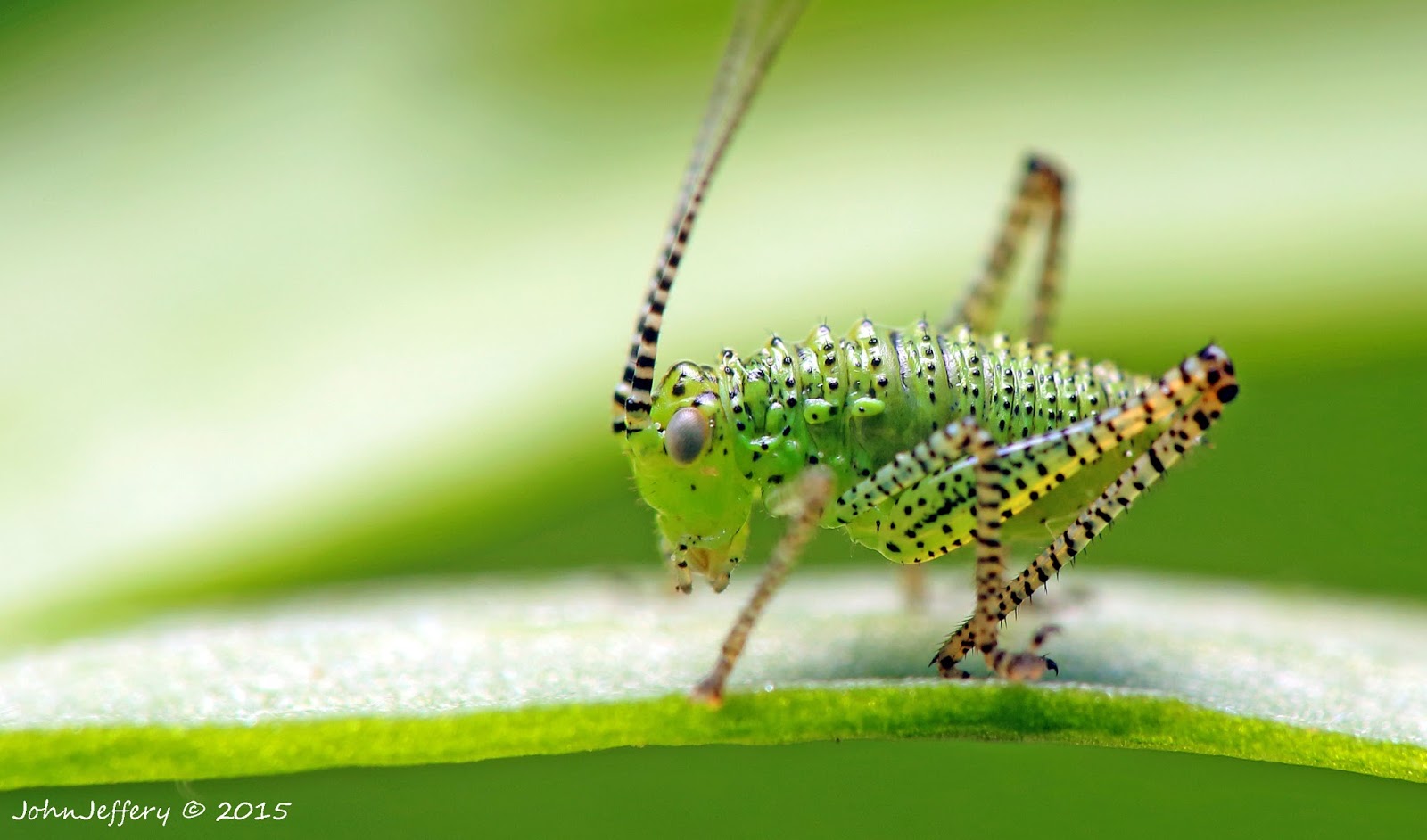
I have been observing lots of little speckled bush cricket nymphs in the garden over the past few weeks....

Leptophyes punctatissima ~ A Speckled Bush Cricket nymph

This cricket can often be found in domestic garden perching on bushes, leaves and flowers, even window ledges. The nymphs begin to emerge in May and then go on to develop into adults by late summer.

The first of these photos was taken using the full macro kit and the second, using the 100mm macro and a Raynox DCR-250 macro attachment. Speaking of speckled things; here's another, only this one was a lot faster!

(Almost) A Speckled Wood Butterfly


The garden also had a visit from a rather pretty moth...

Alabonia geoffrella ~ A Micro-moth

I'll wind this update up with a photo of a starling, also from the garden. I have been forced to take down the feeders that are attracting the starlings for a while. They are so noisy, fight each other over the food and also poo everywhere!


Until the next time...

Friday, May 30, 2014

Featuring a moth that looks like a rug....


A few loose ends to tie up from previous updates before I get into this latest one. Just to refresh your memory, I had this tiny cocoon that I found and have been keeping, in the hope that I would eventually find out what was going to emerge from it.
It did look as though the larva that I had videoed inside had been parasitised and so the expectation was that it might be one of the wasps that are know for this behaviour. Well, I'll keep you in suspense no longer, because I am here to tell you that what has actually emerged is.....................nothing! I'm not sure anything will now either?

Maybe the conditions that I have been storing the cocoon in weren't right, who knows, but I will keep observing just in case.

The other thing that needs updating from a previous post is how the vapourer moth eggs that I found progressed, or at least, how the larvae got on.


I think it was April 11th that the first small larva emerged and they had all matured by May 5th.


On with the update proper then and once again I have been spoiled for choice as to what to include here. Let's start with a bug that gave me a few headaches trying to ID as I had found it once before and failed-I had to settle for the B.H.D Bug on that occasion-here he (or she) is then...


Why B.H.D. Bug? Just the epithet I gave it in the absence of anything better. It stands for 'Bad hair day bug' but since my initial find back in June of last year Link is here I have been reliably informed by somebody who has a far greater knowledge than I do on these things, that they are Woolly Alder Aphids (Prociphilus tessellatus) and although they look nothing like any aphids I have seen before, as always, I am happy to be informed of the correct identity of these little ones.

It's quite easy to find nymphs of all kinds of bugs right now and close to where I spotted the aphids, I came across these red-legged shieldbug nymphs/mid-instars...


I've spoken before about bugs moulting and how they need to shed their exoskeleton to be able to grow. Well recently I was lucky enough to find a mirid bug that was halfway through this process and I managed a photo of it trying to release itself from the old skin or exoskeleton...

 Rhabdomiris striatellus


On another day, I sat and watched as a couple of male malachite beetles jousted with their antennae on a grass seed-head...


This went on until  the weaker of the two was ousted in no uncertain manner and tossed from the grass before he had a chance to beat a retreat. I daresay they were fighting over a female-you know how boys are come spring. 02/06/14 (Edit: Please see comments for information on this image)


My moth trapping has been the one disappointment this year thus far-I have run it several times now without any really significant finds, or numbers come to that. On one particular night I thought I might have had a visit from a very large moth, maybe a hawk-moth or similar? What I found when I investigated was actually not a moth at all but this huge hornet...


Sawflies? Aren't they really hard to identify with any degree of confidence? So many variations, even within species and instars. Take this beauty I found the other day...


Now I assume that this will be either a dusky birch or just plain birch sawfly. It was found on birch after all but it could so easily be one of the others.


Although the moth trap has been less than exciting to date, I did find this spectacular day-flying moth on one of my walks. This is surely one of the most spectacular day-flying moths, with its striking colour combinations and those large, furry palps...

Alabonia geoffrella

Centrotus cornutus
The horned tree hopper (pictured above) must rival that moth in terms of looking spectacular and I always make a point of looking out for these in local woodland each May-I have found them on nettle, bramble, hop and even willow-herb but this year I was treated to a first in terms of location. I spotted a couple on one particular day and having photographed the first moved on to the second when I noticed that it appeared to be perched on something quite odd looking...


This is actually a caterpillar (possibly orange-tip) that has attached itself to the stalk and has started the pupating process. Quite how or why the tree hopper is sat astride the caterpillar is a mystery to me; perhaps it's as simple as it landed there by mistake ? It certainly wouldn't be interested in predation.

Q.I. Huh? Well, I thought so. Apologies for the photo being in black and white here by the way. It wasn't intended to be so but...there's a story about it that's far too embarrassing to share here!

Back to Technicolour for the last shot I'm going to add to this update then-a couple of may bugs on lupins in the garden. I was pleased with this shot but it's really a substitute for the hummingbird hawk-moth  that I failed to get when I saw it feeding in the garden recently.


Until the next time...