Showing posts with label Rhopalus subrufus. Show all posts

Wednesday, May 14, 2025

JJ goes psycho!

 
Before I get into sharing content in this update, I have a question for you to ponder whilst you peruse the perfectly palatable pictorial pleasantries of this photographic phantasmagoria.....(are you still with me? Oh good) here's the question then: What has six legs but isn't an insect?


I was recently asked (from the other side of the Atlantic ocean) if spring had truly arrived yet, here in Kent?

I'd like to think that the first few images I am sharing here will leave nobody in doubt. This first one certainly speaks to me of spring in England: I took it purely because of the gorgeous, vivid, lime greens that herald this season...


Very similar to beech, but I think this is a hornbeam. But then again, I am no arborist, and so it is possible that it's very similar to hornbeam, but is actually beech! 

Shall we move on to some bugs?

Bibio marci

St. Mark's fly - Hawthorn fly - Fever fly, take your pick, they all apply. Said to emerge on or around April 25th (The exact day I photographed this pair) hence St. Mark's fly.

Another springtime occupation? Well, what do you do when you only live for around a week? Gotta get down to preserving the gene pool. 


I'm not sure what species these two are, but I think I know what they are doing!


Yet more spring behaviour now. But before I describe what is taking place, here's what I'm guessing will be a new word for you?

Epigynum!

These zebra spiders were engaging in some tantric behaviour. When a male jumping spider mounts a female to mate, he will typically face in the opposite direction to the female. The male will then turn the female's abdomen over to the side, to reach her............epigynum. 

That's all fine and dandy JJ: but what exactly is an epigynum?

I'm glad you asked; the epigynum is an external genital structure of a female spider. It consists of a variably-shaped, hardened plate with typically one or two openings through which sperm is transferred from the male spider.

Any further questions? Nah, thought not.


This pair were in the same position for a loooooong time!


I was so pleased to see this next creature too. They are one of the first things I look for when the hazel trees turn green in springtime. The hazel leaf-roller (Apoderus coryli). A weevil which rolls hazel leaves into a cigar-like shape, where its larvae develop, protected from the environment.


Just in case you think they are large beasts, this next image shows the actual size nicely...


Not to be confused with the birch leaf-roller (Deporaus betulae) which looks something like this...


So called 'nut' weevils can be tricky to separate regards species; but I think this one is a female acorn weevil (Curculio glandium) and I was very pleased to find it, and others in my local woods. For the past couple of years, they have been hard to spot.

Here's another, slightly darker female, that I found in the same area as the first.


Once again, just for comparison, the following image shows an acorn weevil on a hawthorn leaf...


Yes, acorn weevils are quite small, but large by comparison to this tiny one...

Minutus feckus

Time for a...

So...


Psycho....didae that is!

There are more than 2,600 described species of Psychodidae worldwide. Psychodidae, also called drain flies, sink flies, filter flies, sewer flies, or sewer gnats, is a family of true flies. Some genera have short, hairy bodies and wings, giving them a "furry" moth-like appearance, hence one of their common names, moth flies. They sometimes inhabit plumbing drains and sewage systems, where they are harmless. 

Circannual cycles!

What JJ? Are you having a moment? 

Not at all, not yet anyway. To quote Dr Google; The circannual cycle is characterized by biological processes and behaviors recurring on an approximate annual basis, spanning a period of about one year. This term is particularly relevant in the analysis of seasonal environmental changes and their influence on the physiology, behavior, and life cycles of organisms.

Very interesting I'm sure. But what has it to do with the price of eggs? 

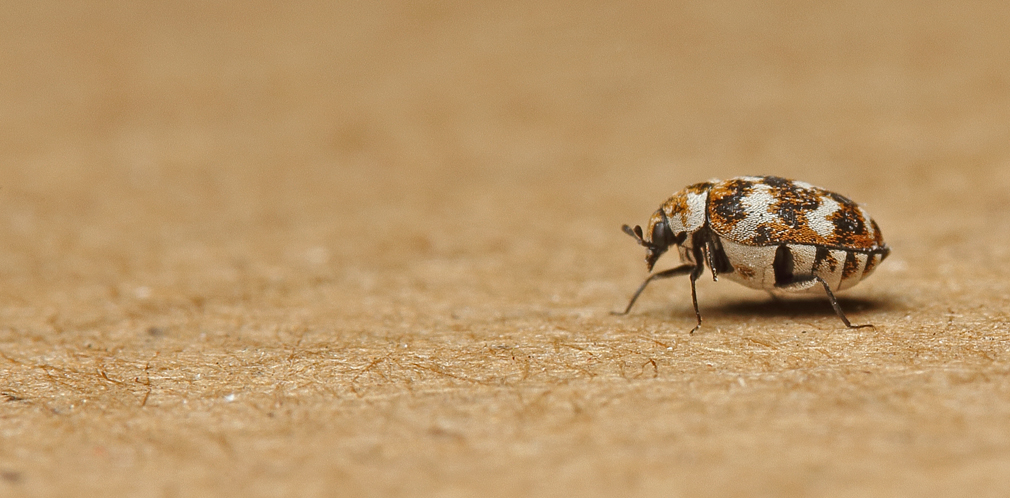
Nothing at all - but it does have something to do with my next photograph. The varied carpet beetle (Anthrenus verbasci) is a 3 mm-long beetle.  A. verbasci was  the first insect to be shown to have an annual behavioral rhythm, and to date remains a classic example of circannual cycles in animals.


Anthrenus verbasci

We'll skip over the fact that they are often considered a pest of domestic houses and, particularly, natural history museums, where the larvae may damage natural fibers and can damage carpets, furniture, clothing, and insect collections shall we, because that's just not cricket!


This however is...

Leptophyes punctatissima

The Speckled bush-cricket, as its name suggests, is covered in tiny, black speckles. It can be found in scrub, hedgerows and gardens throughout summer. Males rub their wings together to create a 'song' for the females.
Right now, my garden is alive with these tiny nymphs, like this one I photographed on a Welsh poppy.


Also in my garden, I recently spotted a few of these strange looking bugs...


I think this is Coccus species? A genus of scale insects. 

When scale insects hatch, they are mobile "crawlers" that search for a suitable spot on the plant to settle down and feed. 
Sedentary Adults, once they find a spot, insert their feeding tubes into the plant's sap and become sedentary. They may remain in the same location for the rest of their lives.

Ancylis mitterbacheriana
Is what 'Google Lens' tells me this caterpillar is. I am not completely sure of the identity, but A. mitterbacheriana looks very similar, and is known to feed on Quercus, and I did indeed find this little one suspended from an oak tree on one of my walks.
These (and other) caterpillars use the threads of silk they hang from to be able to drift from one tree to the next. This species for instance will also feed on beech.


Two for the price of one next. This photograph shows the exoskeleton (moult) of an insect; possibly some kind of hopper, and also the larva of a bagworm moth...


The following image on the other hand (which one is the other hand by the way?) shows a minute nymph that took all of my (doubtful) skills to photograph using the...other, other hand!


A trio of caterpillars now. I haven't found a conclusive identity for the first one, it could possibly be Small Quaker? The second is definitely a Mottled Umber (Erannis defoliaria) and lastly in this  'triptych' of images comes a Pale Brindled Beauty caterpillar (Phigalia pilosaria). 


Erannis defoliaria


Phigalia pilosaria


I am going to assume that although the the alternate dark and light bands on the connexivum (technical term) are not well defined on this individual, it is in fact Rhopalus subrufus; a species of Rhopalid bug. It's the one I find most often, and the habitat of 'low vegetation in scrubby areas and woodland clearings' also fits.

Rhopalus subrufus

And once again, here is an example of what I actually saw, size-wise...


I think it's about time to put this update to bed, and so I'll share a couple more photos before I take my leave, hoping to return with another update real soon.


A rather smart click beetle that I spotted up in a tree in local woodland...


And the only orange-tip butterfly egg I have been able to find this year to date...


Also in the same local woodland, I found this slender ground hopper; a first for me at this location.


Alright, you've made it this far, thanks so much. But I'm sure you have other things you need to do and so it is time to say 'Time Gentlemen Please'


What's that? I haven't told you about what has six legs but isn't an insect?


Tuesday, May 07, 2024

Hope of change?

These photographs represent hope...hope that this year will be the year when I can at last say for certain that the terrible decline in insect numbers locally, has turned a corner. 

They were all taken on one short walk in local woodland about a week ago and although I don't have photographic evidence of everything I saw that day, I am convinced that in total, I spotted more bugs and insects, both in terms of numbers and species, than I have seen in....well, possibly years!

I hope you enjoy the images I do have, as much as I enjoyed finding and sharing them...


Let's begin with this super Mottled Umber caterpillar...


Swiftly followed by my very first Damselfly of 2024 - a Large Red (Pyrrhosoma nymphula) which is our most common Damselfly in the UK. This is a female.


And a dorsal (overhead) view...


Next is this 14-spot Ladybird (Propylea quattuordecimpunctata)


I don't think I have seen one this dark in colour before; even though they can be quite variable. Perhaps this one is fresh, as I believe that fresh adults tend to be more deeply coloured than older ones...


And then our only vegetarian ladybird: Subcoccinella vigintiquatuorpunctata; a 24 Spot Ladybird. This one is very small at 3 or 4mm and is also, strangely, hairy!


I have been finding quite a number of these striking Acorn Weevils in the woods; but not too many females, like this one. Females have the huge rostrum that seems to be equal in length to their body. The female uses the long rostrum (snout) to bore into the centre of an acorn to lay her egg. The larva feeds within the acorn and eventually bores its way out.


I'm not too sure of the identity of this next weevil. It was found on a hazel leaf and there are a few blue, metallic species to choose from. A tentative guess might be 'Byctiscus' species...


The same goes for this next beetle: my photographs are not really clear enough for me to be confident (although I am sure others may well be able to tell). If pushed, I might plump for 'Anaspis' species, and who in their right mind doesn't enjoy a good plump!


I am confident of this beautiful, red beetle though. A Red-headed Cardinal Beetle (Pyrochroa serraticornis). There is a black-headed version, which I also find in these woods from time to time, but it is less commonplace.


Again, this beetle has proved to be elusive regards completing a confident ID. It was tiny, I can vouch for that fact. 


This one is far more familiar to me. 'Cassida vibex' - The Tortoise Beetle.


A Female  St Mark's fly, or 'Hawthorn fly. (Bibio marci) 


St. Mark’s Flies  are so called because they emerge around St Mark’s Day, on 25th April every year, and can be seen in flight in May. They are found around woodland edges, hedges, rough grassland and wetlands and can be seen throughout the UK in spring.


I'm afraid that this is another fly that I cannot put a name to, but it may be Brian??


'Myathropa florea': a Hoverfly (Female)  


This one is a Sawfly. Sawflies are wasp-like insects that are in the suborder 'Symphyta' within the order 'Hymenoptera', alongside ants, bees, and wasps. The common name comes from the saw-like appearance of the ovipositor, which the females use to cut into the plants where they lay their eggs.


I just thought this was kind of cute when I saw it, and so snapped a photo...


"Okay lads, as you know, we are the secret seven. By the way, has anyone seen George? He's always late..."


This huge fly is 'Tachina fera', a Tachinid Fly. It can often be seen in moist and well vegetated locations where it feeds on umbellifers and waterside plants during May to September. The larvae are parasites of caterpillars, and if you'd like the full, gory details, they eat the caterpillar from the inside!


Always a pleasure to find these bugs. This one is a Rhopalid bug - 'Rhopalus subrufus'.  This species is (thankfully) relatively easy to identify from a photograph.  


This final photograph shows just how hairy they are...


A couple of plant bugs now. 'Harpocera thoracica' is a rather common species (even so, I had not seen one in these woods for many years until now). I've occasionally heard them called Handsome Plant Bugs. This is the male... 


And this second bug is actually the same species, but this is a female...


But what about this strange looking bug, I hear you cry? You didn't? Oh well, I shall tell you anyway, it is yet again the same species. But this is a final instar nymph...


From Plant Bugs to Shieldbugs: This is 'Eurydema oleracea' a Brassica Bug, sometimes called a cabbage bug. They come in a few colourways; I found the black and cream, and also the black and red versions.


Spring in this part of the world, wouldn't really be spring without the omnipresent Dock Bugs (Coreus marginatus). People tend to think that these are Shieldbugs, but actually, they are Squashbugs (Coreidae family).


And so, you knew that eventually we would arrive at the spiders right? I saved them until last, so as to not frighten you away at the start of this update, but now it's their time.

This handsome fellow is 'Araneus triguttatus' A Deciduous Orb-weaver Spider.


I won't bore you with exact ID's for all of the following spiders: even if I could remember them!
Let's just leave it as Crab Spiders, and mostly, if not solely, 'Xysticus' species...


Followed by this smashing little green spider; loosely referred to as a Cucumber Spider. Probably 'Araniella cucurbitina' 


And a Long-jawed Orb-weaver (Tetragnatha sp.)


And finally, a spider I have not seen or recorded before, and so this was another nice find. (Pachygnatha sp. Probably P. clercki).   


Well this feels like quite a full and fairly extensive update, and so I'll bid you farewell...