Showing posts with label Brimstone. Show all posts

Saturday, April 07, 2018

Les Dawson, Tony Blackburn and Lady Ga Ga drop in...


Even so, I eventually made it back here to publish another exciting blog update. Alright then, a moderately arresting update!

Yes! At long last spring has decided to poke its head out from behind a cloud and give us all a big, warm hug...

“Awake, thou wintry earth. Fling off thy sadness! Fair vernal flowers, laugh forth your ancient gladness!”- Tony Blackburn


You may want to check the validity of this attribution: it may not have actually been the owner of a grin so cheesy that it's cheesier than a lump of cheese wrapped up in cheesecloth inside a cheesy sock!


Before I get to the update, I guess I should provide an answer to my mystery object from a couple of updates ago: You might recall it looked like this...


Well it wasn't some kind of plant as was suggested to me, and it wasn't fungi or slime mould. So here is the full image that I cribbed (or should that be cropped) the picture from...

The Alder moth and caterpillar (Acronicta alni)
Yes, just a little caterpillar/larva of the alder moth.


This video will not show in the e.mail version of my update; you need to view on the internet site...

One of my emperor moth cocoons has been twitching a little and so I have been watching closely to see if it may eclose soon: so far no signs that it will though.

However, I did find that one of the large white butterflies had emerged...


I had to keep it for a couple of days whilst I waited on the weather, but then was able to release it on a sunny day and saw it fly off quite happily (although, I am not sure exactly what a happy butterfly looks like to be honest).


And I think it was on a willow sapling that I spotted this tiny wasp. I wondered if it was egg laying and that got me to wondering if this is perhaps a gall wasp? I do know that willow leaves very often have galls attached, but seem to remember that they are usually produced by sawflies? 


Now that spring has officially sprung and there is even an upturn in the weather, as if it knew what was expected of it, I have been finding increasing numbers of invertebrates to observe and try to hone my photography skills on. After what seems like an inordinate amount of time passing without even picking up the camera, things are on the move...

At first I found a bee...


Then I found a fly...


Then I found...a bee-fly... 


Then I found a lady...


Then I found a bird...


Then I found a ladybird...

10-Spot Ladybird


I think I may look for the meaning of life next!


A Brimstone Butterfly

My butterfly count is coming along for this year. Okay, so they are the species that you might expect to see early spring; being the ones that hibernate, but still, so far I have seen comma, small tortoiseshell, large white, peacock and brimstone: in fact there already seem to be above average numbers of brimstone butterflies locally this year.

The last thing I can update you on is the progress of the nesting blue-tits in the garden. They are doing well actually. I think the nest building stage may be nearing completion: the tempo has certainly increased over the past couple of days and there was still nest material being added at well after 7pm tonight...


Even if at times there has been a struggle to enter the box...


This video will not show in the e.mail version of my update; you need to view on the internet site...


Wednesday, July 12, 2017

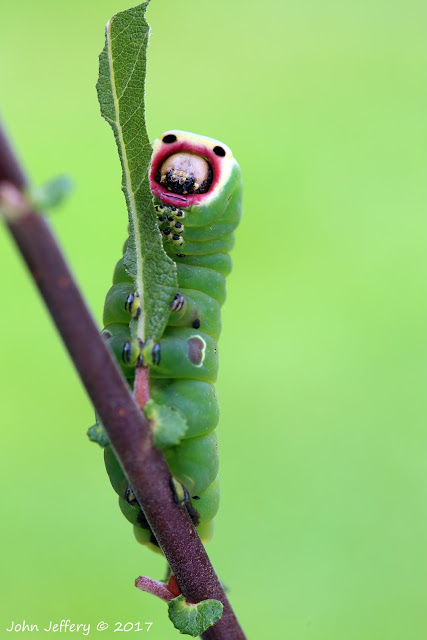
"The most dangerous caterpillar species in Britain!"


Yes, it was Saturday December 18th 2010 when I wrote the following words in my first ever blog post: "In the beginning: I'm making a start on this new blog today. It's cold and snowy in Kent, with little to offer in the way of interesting, outdoor macro subjects to photograph".

And today July 12th 2017 I am here writing my 200th update. According to statistics, most people quit blogging within the first three months (you spend time working on something without a reward, the harder it is to continue doing it). For me the truth is that I love doing these updates and would probably continue even if they weren't being read. Thankfully, due to some loyal followers, my little blog continues to be accessed in at least a dozen countries, with UK, USA, Netherlands, China and Belgium being the top 5 regards amount of views. 

A sample of just some of the bugs and insects that I have featured here over the past seven years...


What have I got that is special for this update? How about...

 "The most dangerous caterpillar species in Britain!"

That is how I have seen the caterpillar of the puss moth (Cerura vinula) described. The puss moth is quite an easy moth to identify and inhabits wooded, or lightly wooded areas where there is plenty of willow or poplar. Here's a recently emerged adult moth that I photographed in 2015...


But it's the larvae that interest me most. As with all larvae, they are predated by many other creatures. In order to protect themselves, they have the ability to spray formic acid at their attacker! 

A Puss Moth Larva - Cerura vinula


Formic acid is interesting in itself and gets its name from the Latin name for ant "Formica". There is a little video of wood ants spraying the acid, it's on YouTube if you feel like having a look. Formic acid is actually found in the bites and stings of many insects, including bees and ants. It is also a contributing factor when you get stung by nettles. It's used by farmers to preserve animal feed, bee-keepers use it as pesticide against the deadly Varroa mite and if all that leaves you wanting more, then I can tell you that it is used in the treatment of warts and as a toilet bowl cleaner.


I'm starting to feel a tad guilty now, because the other day I had to rescue yet another bee from the bird bath. I really don't know why, or how they get into the water, but once in, they seldom get out...


This one however lived to see another day and once dry, flew off seemingly unharmed by its dunking. I think this is probably a wool-carder bee. 

---------
I have been having a few early morning walks whilst this hot weather has been with us. I tried a few evening ones too, but the mosquitoes gave me such a hard time that I soon stopped those. In a local, uncut meadow, I found this large beetle. Unfortunately it was quite low down in the grasses and even so, the light wind was enough to make it almost impossible to get a perfectly focused picture...


This is most likely Nicrophorus investigator. There are other similar beetles but I think judging by its size and the reddish antennae tips (that you cannot see well here because of the movement) it seems to fit. As always, there are mites attached. This is the beetle that uses carrion to house its young.

In the same woods that I found the puss moth larva, I also spotted this fabulous grasshopper nymph. Possibly a field grasshopper but wouldn't put my house on it...that would flatten it for sure!


I was pleased with those two finds but ecstatic over the next: a species of butterfly that I have never seen before, let alone photographed. It was in woods that I know well too and have surveyed for insects in the past. There was another survey in about 2010 I think, and this butterfly was definitely not on their list either. It's the beautiful purple hairstreak...

A Purple Hairstreak - Favonius quercus

The UK Butterflies website says this about it: "It is often difficult to locate, due to its habit of flying in the tree canopy, where it feeds on honeydew. However, the adults are occasionally seen basking at lower levels, on various small trees, shrubs and bracken". It's the side of the wings that you can't see here that have the purple colour, although not as much in the males as females. 

One day whilst out walking without the camera, I managed to capture these 2 pictures of a brimstone butterfly with my phone...


When I found this crab spider, its face was still covered in the remains of its dinner (been there!)


And this is what it had just been dining on...


The crab spider here is Misumena vatia: It's the same spider that in a recent BBC 4 programme about life in our back gardens, Chris Packham
said could change colour to match the background. He didn't mention that it is only the mature females that have this ability; and that the colour changes are restricted to white, yellow and green(ish). 

Well I have lots more that I could share, but I think there is more than enough here for one update, so I shall save it for next time. Instead I will leave you with a few shots of something that has not featured much at all in the updates...until now: it's the humble garden snail...


Saturday, September 13, 2014

A sluggish slug that isn't even a slug...

When I go out looking for extreme macro photo opportunities, I tend to take the whole shooting match in terms of kit. I'll usually have the DSLR with hand-grip and off camera flash unit, with a fairly large home-made diffuser attached. I'll probably have my second camera in the bag as well with a separate macro lens for slightly larger subjects.

All this can deliver great quality images but is cumbersome and can also be restricting in some ways too. That's why I recently decided to ditch it all and take just one camera and lens for the day. The 100mm macro can be challenging to use with just natural light at 1:1 mag as there is not much light working that close and of course depth of field is limited too, there's no IS on my old version of this lens and so I need to keep the speed up at 100+ to be sure of sharp(ish) images.

Anyhow, excuses over...time to share some results of my day....


These carabid beetles were the first thing I encountered and as they seemed....distracted, I was able to spend a little time photographing them. I am not sure of species here but it was unusual for me to see them up on the seed head like this, they were quite large too.


Next up was this female Common Snout-Hoverfly, or 'Heineken' fly as I have heard it called.  

Rhingia rostrata


Rhingia rostrata


These are quite easily recognised amongst the hoverflies by the orange abdomen and long snout. As I can't see any back margin to the abdomen on this one, I think it is the less common Rhingia rostrata. R.campestris being the other possibility. The plant it's feeding on is scabious.


A Speckled Bush Cricket

This bush cricket seemed to have a deformed back leg. I have seen many crickets and grasshoppers with injuries to their legs and even missing limbs. They seem to survive okay, although it will slow them down of course and that can mean less food.


A Meadow Grasshopper

The grasshopper pictured above was sitting right on the edge of a spider's web. As you can see we had a shower of rain around the time of this photo. I think the ID is right with that broad brown stripe but I am always willing to be corrected.
It does serve as a good example of the differences between crickets and grasshoppers though, with the much shorter antennae on the grasshopper.


It also links in nicely with this next image...


Another meadow grasshopper but this time, I got a bit adventurous and so this is comprised of 17 separate images stacked together. The idea being to give more detail and have a better depth of field. 

Here's a crop from the same image...


I was quite pleased with how the stacking software dealt with these images as they were not at all well aligned being hand-held. Here's a little sequence showing the movement between shots...


You might also have noticed that this individual actually does have a missing limb. Well, if you're going to be stupid enough to attempt these stacked images, at least choose a subject that is less lightly to hop off immediately.


I'll tempt you with this next photo of a pretty bug before I introduce 'the slug' then?

Corizus hyoscyami
Corizus hyoscyami is a rhopalid bug that I usually find in the garden each year, although this one was in local woodland. About 9mm in length.


              Are you ready for the slug then? If it helps any, it isn't a real slug...

A Pear Slug Sawfly larva (Caliroa cerasi)

This is actually the larva of a sawfly and they cover themselves in this dark green slime to become unpalatable to predators. When the larva are fully grown, they drop off the plant they have been feeding on and pupate in the soil.


Elasmostethus interstinctus

This little birch shieldbug instar dropped onto my hand when I was turning over birch leaves to see what I could find. There's another shieldbug nymph in this next photo if you look hard enough...


 Close-by I came across this dock bug that had freshly moulted and was still very red looking...


Coreus marginatus nymph


Coreus marginatus nymph


The final challenge I set myself on this particular day was to try and photograph some brimstone butterflies in flight. I failed miserably with the macro lens but enjoyed trying. I think next time I'll try again with a different lens, maybe a longer one to give me a better chance of keeping the butterfly in frame long enough to get a picture...


I'll leave you with a shot of the great early morning light from the same day...


Until the next time...