Showing posts with label Bugs. Show all posts

Monday, September 12, 2022

Welcome to the 'I couldn't think of a title' blog update...

 Hello!

I have been writing and publishing these blog updates for more than a decade now, but this one is going to be different, very different.

There have been some seismic changes to both the world, and my own personal circumstances that have me wondering what it's all about, and I am sure that many of us will be feeling the same way.

It brings into sharp focus the superficiality and frivolousness of sitting here hour after hour constructing these updates. 

And so, I am seriously contemplating the usefulness of continuing to do so, both for you dear reader, and myself as author.

For now though, I do have a good many photos that I feel I can share, and as I am short on words, (never thought I would write that) I will let the pictures do the talking...


A tiny nymph I discovered in my garden: possibly  Deraeocoris lutescens


Superb looking Jumping spider in the house: possibly Pseudeuophrys sp? But keep in mind that I currently feel brain-dead!


Next, a couple of Common blue butterflies...


And a few images against a dark background by way of a change...


Deraeocoris ruber nymph: probably! Once again though...who knows? Not me!


It's a Damselfly ;-)


And a late-evening butterfly (Gatekeeper) photo...


I do happen to know that these are pictures of a Red-legged shieldbug nymph...


Just because I rarely see one: a male Garden spider


Odd looking fly (Look who's talkin')


More flies...being flies and doing what flies do...


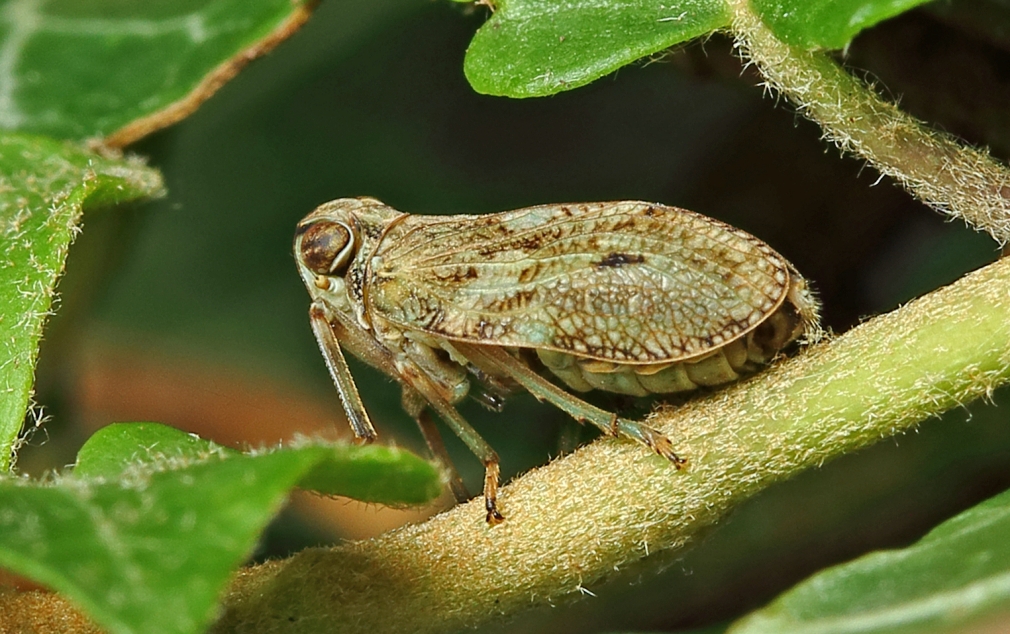
Issus hopper (If I forget what this one is called, you'll know for sure I've lost the plot)


Okay. That's all. Thanks for partaking.

Much love
JJ. 

Monday, November 04, 2019

The first new insect type in 100 years...

It's probably about  a month since I was here last. But just because I have been away from the blog does not mean I have been idle. Oh no! Far from it. Where have I been, what have I been doing?

Let's start with where I have been: it used to be bear, now it's golden. Its motto is 'Eureka'. 'General Sherman' is almost certainly its oldest inhabitant  estimated to be 4,650 years old!  A well known valley here set  the hottest temperature ever recorded in the world- 134 degrees Fahrenheit. One visual clue? Okay here it is...

                  
Nope, I don't really understand that graph either; but it is supposed to represent the vowel shifts associated with 'California-English'. And so just in case you missed the not-so-subtle clue there: yes, I have been in California again.
Did I take my macro camera gear with me? You betcha!

Do I have photographs to share? You bet your sweet bippy I do...


Now I am no expert on North American insects but I think this might be Hylephila phyleus - The Fiery Skipper.


Not too sure about this darker one though. I spent way too long trying to research an identity for this little skipper and the closest I could get was Poanes melane - The Umber Skipper: hope that's right.

I do have more skipper photographs, plenty more to be exact as unlike here in the UK, there were still lots around: but let's skip those for now and move on to one of my favourite tiny creatures...


These  jumping spiders are pretty commonplace it seems, but a real challenge to photograph. I kinda wish I had taken the extreme macro lens, but was trying to travel as light as possible.

Then again, I wish I hadn't just invented an excuse as to why these photos aren't sharper. How about if I said that I was enjoying being in America, and in particular the Californian sunshine, so much, that I  was possibly not giving photography my fullest attention? 


Let's move on shall we. I know you don't all appreciate the beauty that I see in spiders. I cannot claim that I found this next creature myself, because, well, I didn't. But...I did manage to sneak a couple of pictures of what turned out to be a pretty impressive shieldbug, or stinkbug as they like to call them ...


Brochymena arborea, otherwise known as the Rough Stink Bug would be my guess for this one. Rough stink bugs are very well camouflaged and closely resemble the colour and texture of the tree bark on which they live. And in case you are looking at my photo and thinking to yourself 'It doesn't look well camouflaged to me', this one was underneath the bark, the other side was very similar in appearance to the bug.

There are a couple of other Bronchymena species that it might be, but I plumped for this one after much consideration. Frankly I was starting to get bug-eyed and losing the will to live anyway, so settled on it being Bronchy-thingy-wotsit...whatever I said at the start of this ramble.


Well if attempting to identify the last critter tried my patience, then this one, at least for a while, completely banjaxed it! At first sight I thought it might be Plectoptera (Stonefly) but that didn't seem to fit perfectly. Snakefly? Nope. Flying ant? Nope. Have a look at my photograph, see what you think...


While you are contemplating that image, did I mention that there was an earthquake during the second week of my visit? Yes, 4.5 or 4.7 depending on which report you read. It was surreal: it was about 10.30 at night and I was already in bed. You don't expect to be lying in bed and then the earth suddenly moves do you! Not in my bed you don't.
                                                     ðŸ˜‚


Anyhow, back to the story; after doin' me 'ead in trying to  find out just what kind of creature this was, I had a lightbulb moment. Doesn't happen very often, but somewhere in the back of my mind I thought I recalled reading something on the BBC website that might be pertinent, and sure enough, a quick Google revealed this...


Well butter my butt and call me a biscuit! A webspinner eh, and we now have them here in parts of the UK. But what is a webspinner? Here's the official word:

The order Embioptera, commonly known as webspinners or footspinners, are a small group of mostly tropical and subtropical insects, classified under the subclass Pterygota. The order has also been called Embiodea or Embiidina. Webspinners have up to 2.5cm long brown bodies and are the only insects that produce a silk webbing from their front legs, living in tunnels constructed from it to protect themselves from the elements and predators.

And so this actually turned out to be quite an intriguing find for me.


The story even made the Telegraph newspaper who ran this headline:


Britain gets first new insect type in 100 years, as webspinner from the Tropics found to have migrated to Surrey.

Too much excitement is bad for your ulcer, and so let's calm things down a little here; there was one particular insect that I had on my wish list for this visit, not going to reveal it just yet, but here's an anagram to tide you over...'tis a man'. C'mon, I may as well have told you outright huh?


This photograph (above) is 'Asclepias speciosa' the Showy Milkweed. It belongs to the Acanthus family of plants and seems to be well suited to the Californian growing conditions. It has these rather large (about 3 inches or so) fruit pods and attracts many insects, including aphids by the thousand, and a superb looking bug called a Large Milkweed Bug (Oncopeltus fasciatus). 


The large amount of aphids is of no consequence to the milkweed bugs as far as being a source of food. Milkweed bugs are herbivores and consume milkweed seeds. Compared to here in the Uk it seemed very late for nymphs to be still around, but not in California: in favourable conditions reproduction occurs all year round. 

An adult male and lower photo shows two nymphs.

Many fruit pods were alive with both adults and juveniles.
Apparently studies have show that northern populations of these bugs will migrate, whereas southern ones remain sedentary.


Well this blog update that began as a leisurely stroll through Californian wildlife, has already become something of a behemoth. I guess I should get to my exciting 'tis a man' finds; or MANTIS as I like to call them. Yes, I am sayin mantis rather than 'a mantis' for a very good reason.

Yes, the one thing I was hoping to find this visit was a mantis: timing seemed good and so I was hopeful that by the end of my stay  I'd be able to cross it off my bucket list.

Wednesday October 9th was my first day out with the camera searching for these amazing insects. Did I find one? No I did not.

What I did find though was FIVE! Yes...F-I-V-E !!

Well...paint me green and call me a cucumber!

I took squillions of photos, but somehow managed to keep the total to just six for this update - although I may get tempted to add more to future updates.


I was SO excited to see these that I almost had an accident! On the very first day as well: in their natural environment too. Fabulous insects full of intrigue and wonder for this English country boy. 

Now you are not going to ask me to identify these to species level are you? Oh, you are... bugger...erm... Arizona Mantis (Stagmomantis limbata) was one possibility, with European mantis (Mantis religiosa) being another. Or even possibly California Mantis (Stagmomantis californica)  for the green ones. Perhaps the darker/slimmer one might be something like Japanese (Tenodera aridifolia) or Chinese (Tenodera sinensis) Mantis?


What I do know is that they are stunning insects for me and after finding and photographing them, I was on a high for the rest of that day. I had several more encounters over the next days and weeks which I may get to share sometime soon.


Alright, time to call an end to all this indulgence for now. A couple of final thoughts to share: I discovered that I do not like dill pickles! Euwwww! I don't even like the look of corn dogs, let alone the thought of eating all that batter. As for the corn cob pipe, which looks like this...


No thanks friend. 

What did I enjoy? Well I now have a penchant for brownies and the root beer I tried was pleasant enough. 

Thanks for wading through this rather long update: I am most grateful to you -


A very quick postscript?

Okay, I will be concise: when I got to San Francisco airport to board a plane home, I was amazed, and more than a little excited, to find that INSECTS were on display throughout the part of the airport I was in...


Shame nobody spell-checked the text!


Sunday, November 05, 2017

It's a sad goodbye to the Stig....

Yes indeed: time for another weblog. I recently read a couple of quotes about blogging; here's the first: 'The first thing you learn when you're blogging is that people are one click away from leaving you. So you've got to get to the point, give them some value for their limited attention span.' 

How rude! You don't have a limited attention span do you? Hello...hello.....H-E-L-L-O !

OK...OK, I can take a hint -


The other quote I read was this one: 'I think blogging, by and large, is basically therapy. I think a huge percentage of people who are blogging are doing it for self-therapy.'

Pull up a couch then, I feel the need to confide...


A female moon moth (Actias heterogyna).

I wasn't really expecting this but just 20 days after pupating, one of my moon moths emerged as an adult. How gorgeous are these? Totally! My AES care-sheet had this information: Adults often emerge from the cocoons four-six weeks after pupation. This is a female and a few days later I also had a male...


Apologies, it isn't a great picture of the male is it (these are both just phone shots). I will try to get a better one for a future update. They are living in my studio now, as they cannot be released and do not feed. They actually only live for about a week or so anyway. 


One morning when I checked on them they had left me a little gift...


But are these eggs fertile? I have no idea whether the two of them 'got it on' but according to the information I have they do seem to be the right colour: the infertile ones tend to be a blueish colour. I am caring for them as suggested and will update you should the circle of life start over. 


Speaking of the - 

Last week I had to say goodbye to my friend 'Stig' the stick insect. He was quite an old man in insect terms though; I had cared for him for over a year, which is a good age for his species. I needed to ensure he had a decent and dignified internment and so I constructed a little casket from cardboard, painted it up and placed him inside. He's now in the back garden...


Alright, I know! He was only an insect, and I really don't care if this is thought of as over the top: I like to think that as a captive bug, which he would have been whether I had him or not, I gave him as good and peaceful life as was possible and I shall miss the contact. RIP Stig.


We've talked about new life and the end of a life and so how about something that might be considered half-way between? What am I talking about? Hibernation. The bug count on my walks is falling faster than an MP's reputation now, but I did spot this hibernating parent bug wrapped inside a leaf recently...


Elasmucha grisea - A Parent Bug
Think how short our own lives would feel if we hibernated. They say that we already sleep an average of 25 years over a lifetime. The other thing that always strikes me is that they cannot close their eyes, no eyelids! 

I actually saw a number of parent bugs and most were afflicted by a parasite egg...


This is most likely the work of the tachinid fly, Subclytia rotundiventris which is a specialist endoparasite of females. The fly strategically places the egg at this point so that the bug is unable to reach to remove it. After hatching, the larva feeds on its host. At the beginning the parasite feeds only on the non-vital parts of the bug, but finally it kills it.

Interestingly, the larva ‘permits’ the parent bug to continue caring for the juveniles until their third stage. However, the adults often die before the end of maternal care. Not that the ones I am seeing now will be about to give birth - wrong time of year.

On the same walk, I saw this spider walking on tippy-toe...


I think this has all been pretty cathartic for me and I am sure that your short attention span has been stretched to the max, so I shall apply the brakes at this point and end with another of my Japanese bugs that I found just yesterday in the garden...

Stephanitis takeyai - Andromeda Lacebug (Tingidae)


They sure are strange looking bugs when you look closely...


This information is from the excellent British Bugs website: This species is a fairly recent arrival in the UK and was first recorded in 1998. It is native to Japan, where it feeds on Pieris japponica and has been introduced into the USA and Europe via the plant trade. As well as Pieris, it also uses Rhododendron and azaleas as hostplants and is regarded as a pest in ornamental gardens.