Showing posts with label Odontata. Show all posts

Saturday, October 06, 2012

I finally decide to take the plunge...

I've been meaning to get around to a blog entry that features underwater wildlife and now that I've made a start on same, have realised that I've probably now got too much for one entry and so may have to spilt it into 2 or even 3 entries.

For starters, let's go BIG...
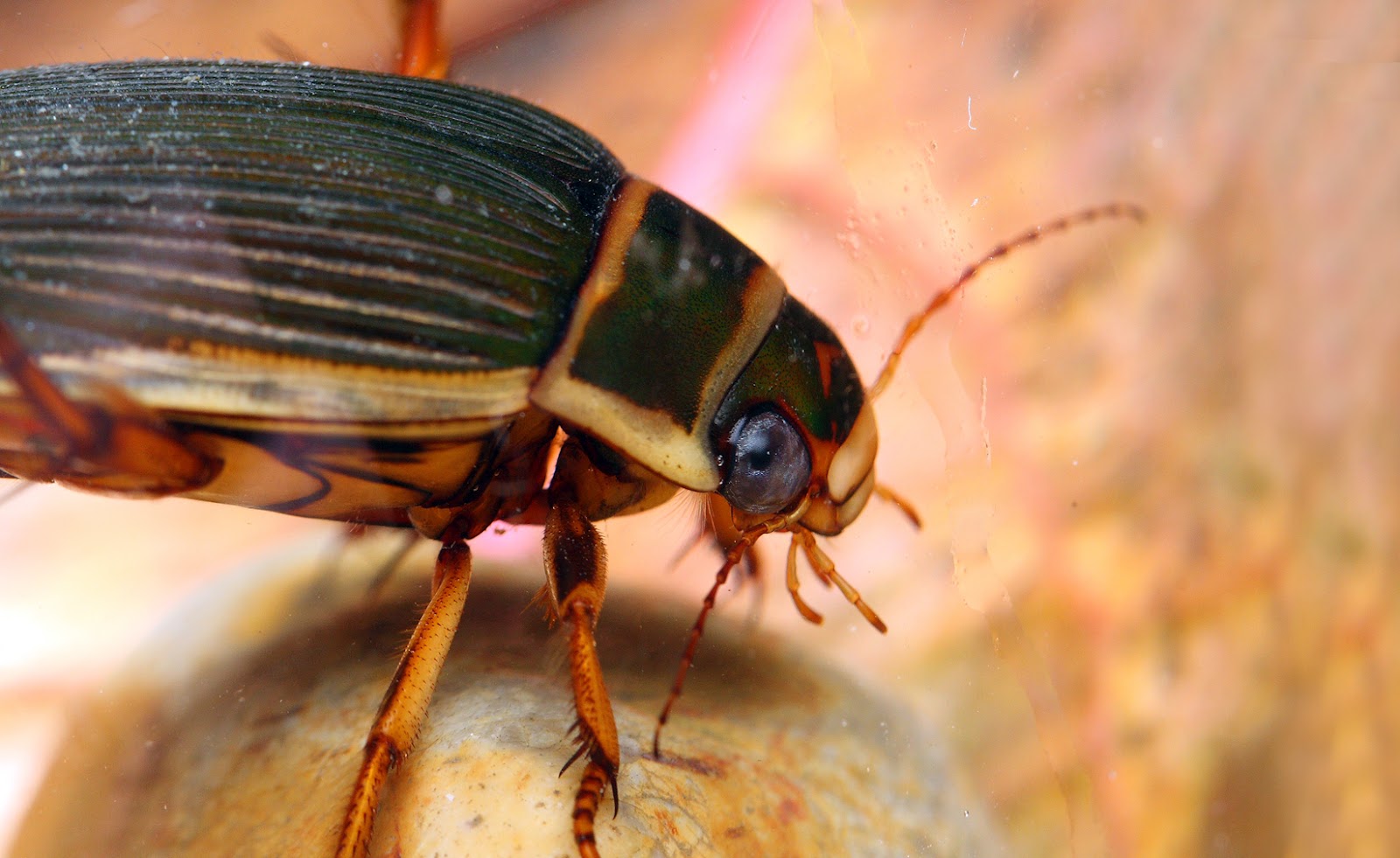

Dytiscus marginalis
This is a female great diving beetle and is one of our largest beetles in the U.K. The adults come in at around 30mm or so (over 1") and can be found in ponds and lakes.


A closer look at these impressive beetles leaves you in no doubt that they can be fierce predators and have even been know to tackle small fish in garden ponds.

The underside
These beetles can sometimes be spotted coming to the surface, pointing the tip of their abdomen out of the water to replenish the air supply stored beneath the wing case-because, although they tend to spend most of their time below water, they can also fly and often do to colonise new ponds.

CLICK ON ANY PHOTO FOR A LARGER VIEW
Aeshna cyanea dragonfly nymph
 Next is this beautifully marked dragonfly nymph. This particular specimen seems to have quite a lot of blue in the markings,even at this stage.


A couple of closer views of a different specimen that has less blue colour.


These are nymphs of the southern hawker dragonfly, a common species that breeds in ponds and flies June-October.


Another fearless little creature that inhabits most ponds and lakes and preys on all manner of aquatic creatures and insects, is the water boatman or back-swimmer...
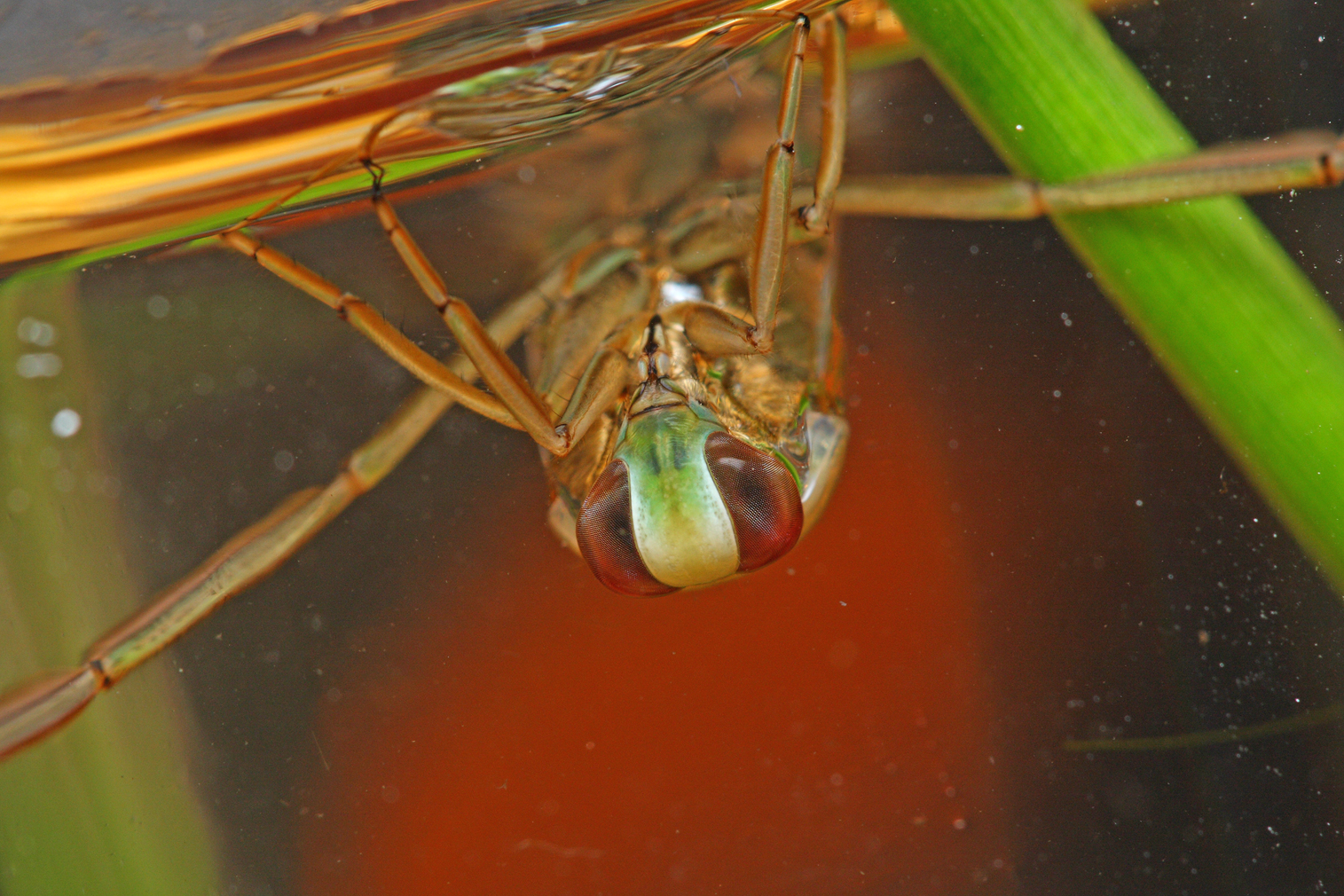
Notonecta glauca


To give them their correct title, these are lesser water boatmen-there is also a greater water boatmen, but those swim the right way up making them easy to tell apart.The seems to be some confusion over water boatmen and backswimmers though as I've seen the greater water boatmen described as backswimmers and the lesser described as just water boatmen! 

There are two families:Corixidae for the smaller ones that swim the right way up (are you following this?) and Notonectidae for the larger ones that swim on their backs. There, that's cleared that up?

Even though most water boatman are vegetarians, some will also eat other insects and apparently it's unwise to pick one up, as they can give a painful (although harmless) bite.


This little video I managed to get of one underwater demonstrates two things:firstly,the silvery appearance you see here is caused by a clever trick that allows them to remain under water for longer (up to 6 hours).They hang upside down below the water’s surface and collect air, they then carry this air as a bubble on their body or under their wings.
Secondly, at the end of the video you get a feeling of just how fast they are.


Alongside the dragonfly nymphs, most ponds and lakes and indeed rivers, will have damselfly nymphs also...


I'm not 100% sure on i.d. for these two but think possible the top one is a large red.

Here's my first attempt at filming some damselfly nymphs-it's not over exciting but everyone has to start somewhere and I'm sure I can improve on this...


I think possibly the larger, green one will be a common blue-either that or a blue-tailed, as they are the only ones I've seen as adults at this spot. I'd like to think that it's an emerald nymph and it does look very similar to some I've seen but not seen any where I found this, so not at all sure.

Well, as I suspected, I have lots more pond life to bore... show you yet and so I will endeavour to bring a second update on the same subject soon. If not in the next edition, then the one after...you have been warned!

Until the next time then...


Thursday, June 07, 2012

Cuckoo spit and fly **** (apologies, couldn't resist)


I wanted to begin this blog entry with the photograph you see below to prove a point more than anything else.
I added the picture to my  flickr photostream recently and was disappointed with how the image looked. I have read complaints of how some images once loaded to flickr look over-sharpened and that's what happened to mine. I've compared the two, side by side and the photo reproduced here is much nicer and truer to the original.

Besides all that, I thought perhaps the folks that don't get to see my flickr photos might enjoy seeing this strange beast?

A Horned Tree Hopper
Having got that off my chest, I'll get down to the business of updating you on what's been happening of late.

This year, as last, we have had Blue Tits nesting in the garden, Also replicating last year, when the time came to fledge, one little runt got left behind.


As you can see from the photo, this tiny thing was way behind the others and didn't even have it's flight feathers.
Last year we managed to get the casualty to the local wildlife rescue home-this time we had a problem though, we wouldn't be able to get to the home (around a 16 mile drive) on the same day.

What to do? This little one looked to be quite a bit less developed than last year's too. We phoned the home and explained and they suggested we try and keep it overnight, and then take it to them the following day.

As for food-we were to feed it on scrambled egg, made with water and feed every half and hour until about 9pm, then begin again at first light.


We hurriedly made-up some food and did manage to persuade it to eat a little, but it needed to be convinced, it wasn't asking as perhaps you'd have expected.
Before its next feed was due we began to worry about its condition-it seemed to be fading away and so resolved to change our plans and make the journey to the wildlife rescue centre after all.

Sadly nature took its course even before we'd readied ourselves for the journey and the little bird passed away. We were so upset but being realistic, it probably didn't have much of a chance.


On a brighter note, there's a happy ending to the next story...

At one of our local ponds I spotted a cat that I've seen hanging around previously (in fact I feel this same cat may have been responsible for the demise of the ducklings from a few weeks ago?) and it was pawing at the ground. As I got closer I thought it might have a small frog or toad.
Once the cat had beaten a hasty retreat, I could see that it was in fact a dragonfly nymph that must have climbed from the water very recently, as it was still quite wet.


A Dragonfly nymph
I wasn't sure if the cat had injured the nymph but resolved to find a quiet spot to re-locate it and hope all would be well-I'd check an hour later.

On my return I found the cat had also made a return visit and there out in the open, upside down, was the nymph.


This time I took it home. We have an old water-filled,butler's sink it the garden and I put the nymph on one of the reeds at its edge.
I wasn't at all convinced that it would survive the cat-battering but at least it would be safe for now.

I kept a watch on it for any signs of the adult dragonfly emerging. I've seen and photographed damselflys emerging and they have done so very shortly after leaving the water-perhaps dragonflies are different in this respect because a full 4 hours passed with nothing to see.

Maybe it was not going to happen and the cat had interrupted the process?
I'd have like to photograph the emergence but we had to go out, and would'nt be back for around 3 hours.

On our return, I was a little shocked to see that it had indeed emerged and was starting to dry its wings and expand the abdomen prior to being able to fly.


It didn't seem to be damaged in any way and continued to get ready to enjoy it's brief, hectic life. By dusk it was just about ready for lift-off. By now though the temperature had dropped and it decided to spend its first night with us.

The following morning it was looking great and I knew that it would be leaving as soon as the sun had warmed it. 


That was exactly what happened as this beautiful, male, Broad Bodied Chaser took to the skies.
A great relief to me and I still marvel at how something as dull and frankly, unattractive as the nymph, can morph into this spectacular insect.


----------------------------------------------------

We once lived in a hundred year old, ham-stone built cottage in Somerset, these days however we have a more modern house that boasts the kind of garden most newer properties seem to be afflicted with! A very small-compact-bijou, call it what you will area that limits the possibilities for wildlife.
We've been doing our utmost each year to improve things and encourage nature and at this time of year, we're starting to get more and more creatures either take up residence, or pass through.


Philaenus spumaris-The Common Froghopper may not 'float your boat' but for me, it represents a really nice sight. These little hoppers are now appearing in ever increasing numbers in the garden and with the adults being so variable, with many varied colour forms, they do make interesting subjects to observe.

Add to which, these juveniles or 'nymphs' are responsible for what we all used to call 'cuckoo spit' as kids.


I also found a green tortoise beetle in the garden for the first time this year.
Although this is a somewhat unconventional view of the little critter-it did make me smile and although I did manage shots showing the other side, decided I preferred this one on this occasion.


Lastly for this update I wanted to share this next bit of insect behaviour with you-I'm not sure if it is a reflection on my blog in general but here goes.....

It's a fly taking a dump! Te,he!


By the way, if you're thinking this looks more like a bee than a fly? It is in fact one of the bee-mimicking hoverflies.

Until the next time then...

Monday, October 24, 2011

Return of the frost...

There is a quote that uses the analogy of painting styles to describe the seasons, I can't remember it word perfect but it's along the lines of, winter being an etching, spring a watercolour, summer an oil painting but autumn a mosaic of them all.


Click on any picture for a larger view


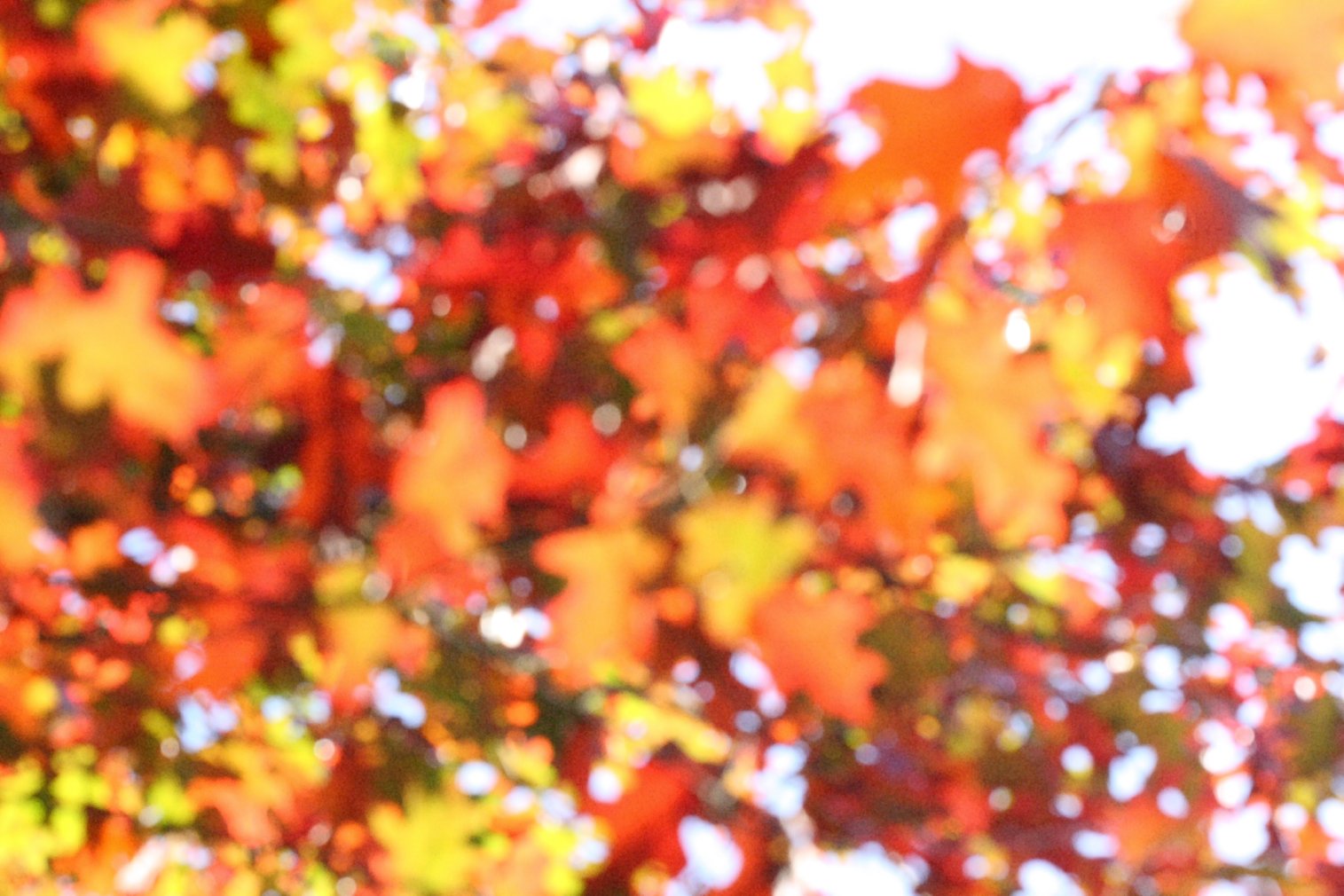
Well, that was the premise behind these shots.I purposely took them out of focus to give an impressionistic vision of Autumn. Rubbish? Probably, but it pleased me so indulge me?


Autumn is just beginning to come alive though and we've been lucky enough to have quite a few clear, sunny days. The two shots above were taken directly behind our house using the little Lumix camera that I've started to carry with me more often now that the colder weather is here.The colours are a bit over saturated but I kinda don't mind too much.


It's also been possible to get a good daytime view of the moon lately.


Whilst I don't seem to have had a great deal of spare time to go bug-hunting recently, it's also true that there are considerably fewer around to see anyhow.
On fine days I still spot the occasional butterfly and as usual there are caterpillars around if you look in the right places.


These two pictures are examples of recent finds that illustrate perfectly how the variation in form, size and colour can make caterpillar/larvae identification tricky. The top one of the two above probably would be most people's idea of a caterpillar when in fact it isn't a caterpillar at all. Whereas, the second photo possibly isn't how you would expect a caterpillar to look and yet this one actually is a small copper butterfly caterpillar.
In case you're wondering...the top one is a sawfly larva.

One creature that will be around throughout this winter however bad the weather gets is the springtail or collembola. These hardy little things can sometimes be seen crawling around on the fresh snow or ice.If you do fancy looking for these yourself, I ought to warn you that the one I've photographed here is one of the largest of the species but even this one is only around 5mm or so.

A Springtail

We have already had a few overnight frosts in this corner of Kent; not hard frosts but enough to turn the grass white and to have to scrape the car windscreen. There's little doubt that the harsh temperatures will have already been responsible for the demise of a good number of our insects. Dragonflies are one species that are not safe in the cold.

A common darter dragonfly

When I spotted something moving on a small piece of wood laying in a crop field whilst out walking recently, it shocked me to find that it was actually the common darter dragonfly shown above. It was soaking up the last of the day's sunshine and was fairly slow to the point where I was able to get a few shots before it moved off. A nice sighting so late in the year and especially so following the frosts.

A couple of days later I was walking the dog on one of my regular routes when I thought I'd check some rhododendron bushes beside a local pond to see if there was any sign of bug life. I'd seen the spectacular rhododendron hoppers there earlier in the year but couldn't imagine that these tiny things would have survived the recent frosts; once again I was proved wrong when not only did I find one but counted at least a dozen on different bushes.

Rhododendron leafhoppers


Speaking of hoppers, whilst walking at the edge of a ploughed field I heard the unmistakable sound of a grasshopper but couldn't actually seen one. I did spot it eventually even though it was well camouflaged. I'm unsure of just which particular grasshopper this is but here's the photo anyway...


Squashbugs are mainly confined to the south of the country and of the 10 species, only two are classified as common. The one that I see most often is Coreus marginatus, the 'Dock Bug'. They feed mainly on fruits and seeds and also possess stink glands and it's for this reason they are sometimes also called 'Stinkbugs'

Coreus marginatus

These bugs can when threatened emit a foul smelling odour from the stink gland that is meant to deter any would be predators.

A closer look at the stink gland

The last photograph in this blog entry is of a little weevil that I found running around on the edge of a cattle trough. It's usually to be found on dock plants, hence it's name of 'rumix'.

Apion frumentarium (Red rumix weevil)

That's about all for now but I'll be back with another update soon. This strange year for insects isn't over yet and there are still some nice finds to be had if the weather continues to be kind.

Until the next time then...